
Table of contents:
The tastiest raspberry is not a raspberry :)
The tayberry is a cross between a raspberry
The plant does not spread aggressively like raspberries often do
Tayberries can also be grown in partial shade
Be careful, let the tayberry fruits darken sufficiently; the color of a red raspberry is not enough. Then it is often best to wait another week.
Are you looking for a special type of fruit for your garden or vegetable patch? Meet the tayberry, a unique cross between a raspberry and a blackberry. This fruit is not only surprisingly tasty, but also easy to grow yourself. In this article, you will read everything about the tayberry plant, from planting to harvesting. We discuss how to plant, propagate, and prune a tayberry, as well as where you can buy high-quality tayberry plants.
What is a tayberry?
The tayberry is a fruit created from a cross between a raspberry (Rubus idaeus) and a blackberry (Rubus fruticosus). The result is an elongated, deep pink to purple fruit that is larger than a raspberry and softer than a blackberry. The taste is intensely sweet with a slight acidity – perfect for fresh consumption, jam, pastries, and even liqueur. I also often add it to my kombucha.
The tayberry grows on a hardy shrub with long, flexible branches that require support. The plant blooms in the spring and provides an abundant harvest in the summer.
I grow my tayberries along 4 horizontal wires. I stretch the first wire at a height of 50 cm and then every half meter higher.

Buy tayberries: strong plants from our own nursery
In our webshop, you can buy locally grown organic tayberry plants of high quality. Our plants are cultivated with care and are suitable for both beginners and experienced gardeners. Choose a strong, healthy tayberry plant from our webshop and start your own fruit project immediately.
✅ Benefits of our tayberry plants:
- Strong roots and healthy growth
- Organically grown or without chemical pesticides
- Suitable for pots and open ground
- Available for immediate delivery
Planting tayberries: how to give your plant the perfect start
Tayberry plants are best planted in your vegetable garden in the spring (March-April) or autumn (October-November). The plant likes sun and well-draining, nutritious soil.
Tayberry planting step-by-step:
Choose a sunny spot – partial shade is also possible, but will yield slightly fewer fruits.
Provide structure – use a trellis or stretched wire to train the branches.
Planting distance – keep at least 80 cm between the plants.
Soil improvement – enrich the soil with compost or organic fertilizer.
Watering – give plenty of water immediately after planting.
A tayberry grows quickly and often gives a substantial yield in its second year.
Growing Tayberries: maintenance and care
Growing tayberries is relatively easy. The plant is a vigorous grower and has few demands, as long as you follow a few basic rules:
- Water: water regularly, especially young plants during dry periods.
- Nutrition: add compost or organic fertilizer annually.
- Support: train the long shoots along a wire or fence. I do this after harvesting the fruit. You can remove the runners that have borne fruit.
- Mulch: cover the soil with straw, wood chips, or leaves to prevent drying out and weeds.
With this care, you will enjoy tasty harvests for years to come.

Pruning tayberries: essential for a healthy plant
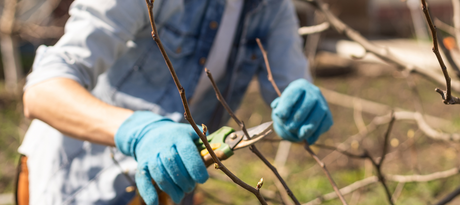
Proper pruning is crucial for the health and productivity of your tayberry plant. The plant bears fruit on two-year-old wood, so proper timing is important.
When and how to prune tayberries?
-
Summer (after harvest):
- Remove canes that have borne fruit.
- Leave the young shoots of that year – these will bear fruit next season.
-
Winter (January-February):
- Prune away dead, weak, or crossing branches.
- Ensure sufficient air and light in the heart of the plant.
By pruning annually, you promote yield and keep the plant vital.
Propagating tayberries: how to multiply your own plants
Would you like more tayberries in your garden? Good news: you can easily propagate them yourself. Tayberries can be easily multiplied via layering.
How to propagate or layer tayberries:
In August or September, choose a healthy shoot.
Bend the shoot to the ground and cover part of it with soil.
If necessary, place a stone on it to keep the branch in place.
By spring, the shoot will have formed roots – you can then cut it off and transplant it.
This is how you create new plants at no cost – perfect for expansion or to give away.
Harvesting tayberries: when and how?
The fruits are usually ripe in July and August. Tayberries ripen gradually and must be picked carefully by hand.
Harvesting tips:
- Pick only fully colored, soft fruits.
- Harvest in dry weather to prevent mold growth.
- Tayberries are delicate: use a bowl or container with a soft lining.
Store the fruit in the refrigerator or freeze them immediately for later use.

Tayberry in the garden or pot
Don't have a large garden? No problem! The tayberry also grows perfectly in a large pot or tub. Use a pot with a diameter of at least 40 cm and ensure proper drainage. Place the pot in a sunny spot and, again, provide a trellis or wire to train the plant.
Why do we choose the tayberry?
The tayberry is an absolute asset to any garden or balcony. Not only will you enjoy delicious fruit, but also an elegant plant that is low-maintenance.
Benefits at a glance:
- Unique flavor: sweet, aromatic, and juicy
- Large harvest from the second year onwards
- Hardy and low-maintenance
- Easy to propagate
- Perfect for both garden and pot
Ready to grow your own tayberry?
Would you like to enjoy freshly picked tayberries from your own garden soon? Don't wait any longer. In our webshop, you will find healthy, strong tayberry plants that are ready to be planted immediately.